















Tidbits and Facts


Recycling and Environmental Facts

  • Recycling 1 ton of paper saves 17 trees, 2 barrels of oil (enough to run the average car for 1,260 miles), 4,100 kilowatts of energy (enough power for the average home for 6 months), 3.2 cubic yards of landfill space, and 60 pounds of air pollution. Trash to Cash
  • Americans throw away enough aluminum to rebuild our entire commercial fleet of airplanes every 3 months. Environmental Defense Fund
  • About 80% of what Americans throw away is recyclable, yet our recycling rate is just 28%. Environmental Protection Agency
  • Over ½ million trees are saved each year by recycling paper in Boulder County. Eco-Cycle
  • There are more roads in our National Forests than the entire U.S. Interstate Highway system. National Forest Protection Alliance
  • Recycling creates 6 times as many jobs as landfilling. Colorado Recycles
  • Recycling glass instead of making it from silica sand reduces mining waste by 70%, water use by 50%, and air pollution by 20%. Environmental Defense Fund
  • Recycling just one aluminum can saves enough energy to operate a TV for 3 hours. Eco-Cycle
  • If we recycled all of the newspapers printed in the U.S. on a typical Sunday, we would save 550,000 trees--or about 26 million trees per year. California Department of Conservation
  • The energy saved each year by steel recycling is equal to the electrical power used by 18 million homes each year - or enough energy to last Los Angeles residents for eight years. Steel Recycling Institute
  • If every household in the U.S. replaced just one roll of 1,000 sheet virgin fiber bathroom tissues with 100% recycled ones, we could save: 373,000 trees, 1.48 million cubic feet of landfill space, and 155 million gallons of water. Seventh Generation Co.
  • The U.S. is 5% of the world's population but uses 25% of its natural resources. Environmental Protection Agency
  • Want more Eco-Facts? Click here.

BOARD OF DIRECTORS

Board President
Allyn Feinberg is a Historic Preservation Planner with a private consulting practice. She is also co-owner of a start-up business to manufacture innovative separation equipment focused on the municipal wastewater treatment for pharmaceutical industries. She is a past member of the Boulder City Council, the Boulder County Recycling and Composting Authority and the Boulder Housing Authority.
Board Vice President

Dan Benavidez is a bilingual Colorado native, a marathon running enthusiast and an avid reader. He received a bachelor's degree in business from the University of Northern Colorado on the G.I. Bill. He served on the Longmont City Council and was Mayor Pro-Tem of the City of Longmont (and to this day is the only minority ever to do so). He has also served on numerous boards and commissions in Boulder County ranging from mental health to planning and zoning.

Dan was one of the original founders of El Comite, a Latino activist organization. He was one of the first members of LatiNoticias, a Northern Colorado Spanish Language Newspaper. He is presently a member of the Longmont Police Department Strategic Plan. He has been in the field of international business for more than 12 years and has traveled and done business throughout the world. Dan is presently senior vice president of international operations for a Texas-based Alcoholic Beverage Import Company. He conducts the majority of his business in Mexico.

Board Secretary

Caron Schwartz Ellis is co-founder, president and "communication maven" of 3D Radio LLC, which developed and is commercializing a patented technology that allows you to manage your radio listening at home and on the go -- letting you listen to what you want, where you want, when you want it. Caron also does contract public relations and technology writing. Boulder residents since 1981, Caron and her husband Mike are avid cyclists and recyclers. They each put many miles on their bikes on the roads and trails in and around Boulder. At home, between recycling, composting and avoiding purchases of overly packaged goods, the two limit their trash to one 32-gallon bag every three or four weeks.

Board Treasurer
David Miller is currently employed as a CPA for Kingsbery Baris Vogel CPAs since 1987. Also has a private practice at home. David moved to Boulder in 1973 and then to Longmont in 1979. He met his wife Lynn Wirsing and her three children in 1987.

Additional Board Members

Steve Bushong lives in Louisville with his wife Katy, their sons Ryan and Jack and their two dogs.  Steve moved to Boulder in 1989 to attend law school at the University of Colorado and is currently a partner at the law firm of Porzak Browning & Bushong, where he practices primarily in the area of water rights, the environment and land use.  Prior to moving to Colorado, Steve was a research scientist at Johns Hopkins University studying water quality issues. Before that, he obtained a master's degree in limnology/ecology and bachelor's degree in biology at Iowa State University.

Steve Kaverman comes to the Eco-Cycle Board of Directors from Broomfield, where he was president and CEO of The Chamber Serving the Broomfield Area in 2006. He was a member of the Broomfield City Council from 2003 to 2007. He currently works as the Director of Client Services and Business Development for The Five Star Institute and as the Sole Proprietor of ASK & Associates, where he specializes in rail travel and directs and guides tours all across North America. He has worked as a volunteer instructor with Boulder County Red Cross and presently as a Naturalist with Boulder County Parks and Open Space program where he has volunteered since 2002. Steve received a master’s degree in organizational management from the University of Phoenix, a certificate in marketing from the University of Colorado at Denver and a bachelor’s of science from Michigan State University. He lives in Broomfield with his wife Amy and son Evan.

Tom McCoy has served on many city boards and commissions, including 22 ½ years on city council and 14 years as Mayor Pro-Tem. He moved to Longmont in 1962 and taught school for 27 years in the St. Vrain Valley School District. He earned his master's from Colorado State University in 1968. Before coming to Longmont, Tom served in the U.S. Army for 2 years. He graduated from Mankato State College in Mankato, Minnesota with a bachelor's degree and taught political science and history in Madera, California for 3 years. He and his wife, Mary, have three adult children who all live in Longmont.

Matt Moseley has spent his professional career working in the field of communications and media. In 2005, he joined the public affairs firm GBSM. Prior to that, he was the Senate Democratic Majority communications director for the Colorado General Assembly under President Joan Fitz-Gerald. He now serves as her communications director. Matt has served as spokesperson for several national organizations and has worked on a number of books. His writing appears frequently in the Denver Post, Rocky Mountain News, Camera and Aspen Daily News. He received a bachelor’s degree in economics from Louisiana Tech University and a master’s degree in public policy from University of Colorado at Boulder.
Pat Shanks is chair of the PLAN-Boulder County board of directors. He is interested in a broad spectrum of issues related to land use, transportation, conservation and a clean environment. Pat is a resident of Boulder and is a research geochemist with the U.S. Geological Survey. Some of Pat’s current research involves potential toxic elements in the environment, mine drainage issues and harmful effects on ecosystems.

John Tayer is currently employed as the community relations manager for Roche Colorado Corporation, a pharmaceutical research, development and manufacturing facility in Boulder. As the community relations manager, John is responsible for coordinating all of Roche Colorado's philanthropic activities and the company's other public outreach efforts. Prior to his employment at Roche Colorado, John worked for six years in the Boulder City Manager's Office as the intergovernmental affairs director.


Why Recycle - Get the true facts about recycling with our "Ten Reasons to Recycle" publication. We also have a fact sheet on the "State of Recycling in Colorado," and a "Why Recycle?" brochure.


Why Recycle - Environmental Benefits

The environmental and economic premise of recycling is sound: re-using natural resources over and over again after they have been extracted from the earth makes good sense. By conserving the dwindling supply of these resources and protecting the few remaining undamaged ecosystems left on the earth, we are preserving them for future generations. Overall, the processes used to make consumer goods from recycled material instead of raw resources is much more energy and water efficient. For example, recycled paper uses 60-70% less energy than virgin pulp and 55% less water. Also, making recycled products reduces greenhouse gas emissions and the need to build landfills.

Consumer products do not benignly arrive on store shelves with no impacts attached. In fact, making goods from natural resources can cause great harm. The destructive nature of mining, logging and drilling in fragile natural habitats to produce goods that will only be used once and then thrown away is extremely wasteful. For instance, for every garbage can placed at the curb, there are 71 cans of waste created in the extractive and industrial processes used to convert raw materials into finished products and packaging. Simply put, making paper from paper, cans from cans and plastic from plastic is infinitely kinder to the earth than clearcutting a forest in the Pacific Northwest, mining for bauxite ore in South America or drilling for oil in the Arctic National Wildlife Refuge.

Recycling not only saves precious resources but also avoids the toxic processes used to turn these resources into consumer products. For example, producing paper from trees requires chlorine to remove lignin from wood. This process produces dioxins, a known carcinogen. On the other hand, recycled paper already has the lignin removed and only requires using hydrogen peroxide to remove ink.

Keeping waste out of landfills also makes economic and environmental sense. One in five Environmental Protection Agency Superfund cleanup sites is a landfill. Contaminated with tons of toxic material, these landfills have cost taxpayers millions of dollars to clean up and monitor, a process that is likely to continue for many decades into the future. For industry experts, the question isn't if a landfill will leak toxins, but when. Therefore, recycling to avoid landfill disposal helps avoid environmental and public health threats down the road.

Although recycling makes far more sense from an economic, industrial and environmental perspective, the extraction industry is heavily subsidized by taxpayers which forces recycled products to compete on an unlevel playing field in the marketplace. Because of this recycled products can sometimes cost more than their virgin counterparts.

Why Recycle - Cost Savings

An integrated approach to recycling and waste reduction can provide appreciable cost savings to businesses. Initial costs to get the service "up and running" will, in the long run, be offset by reduced trash disposal fees and less waste creation. Such a visible commitment to the environment will also result in intangible benefits to employee morale and your company's public perception.

Start-up costs, which in many cases are covered by the monthly charge paid to a service provider, can include the purchase or leasing of recyclables storage containers, container signage and employee education literature, and the cost of transporting recyclable materials to an off-site processing facility. These are the same costs one would expect when contracting for trash disposal service. Recycling at its simplest is transferring material out of the waste stream and giving that material new life to be re-used or re-manufactured into new products. Thus, as the volume of trash generated decreases, a company's associated cost of disposing of that trash will also decrease.

Paramount to establishing a successful business recycling program that maximizes cost efficiencies is active employee participation. This can benefit your program and bottom line in two ways: the more your employees both recycle and reduce the amount of waste they create in the first place, the more your trash disposal cost will decrease. Integrating recycling and waste reduction techniques into your daily operating procedures and the culture of your business will ensure that your employees are saving the company money while they do the right thing for the planet. Ongoing employee education becomes the primary vehicle to ensure the success of your program.

The bottom line: A business recycling and waste reduction program can be cost effective if it is carefully planned and coordinated with staff and employees. While this may appear to be a daunting task, numerous resources exist to assist with the development of an efficient program with achievable goals.

Frequently Asked Questions (FAQS)

Why can't I recycle all plastics?

Just as with different types of paper, all plastics could be recycled if there were a market, i.e. a manufacturer who would use them to make a new product. There are some problems with plastics recycling that limit the market for some types.

Why do most plastics have a recycling symbol on them if they can't be recycled?

Good question. The recycling industry has been butting heads with the plastics industry over this misleading practice, unfortunately with no results. The symbol is meant to indicate the type of plastic, not its recyclability.

Are the plastics I bring in REALLY being recycled?

Yes, if you bring us what we ask for. Any non-recyclable plastic that you leave at the drop-off center will be landfilled and Eco-Cycle will have to bear the cost of disposing of your garbage. So, please don't try to "slip it in" on Eco-Cycle. Please recycle only acceptable plastics through your curbside program or at the drop-off center.

What are the problems with recycling plastics?

When glass, paper and cans are recycled, they become similar products which can be used and recycled over and over again.

With plastics recycling, however, there is usually only a single re-use. Most bottles and jugs don't become food and beverage containers again. For example, pop bottles might become carpet or stuffing for sleeping bags. Milk jugs are often made into plastic lumber, recycling bins, and toys.

A recent development has been the bottles-to-bottles recycling of "regenerated" pop bottles. Though it is technologically possible to make a 100% recycled bottle, there are serious economic questions. Also, some critics claim that the environmental impact of the regeneration process is quite high in terms of energy use and hazardous by-products.

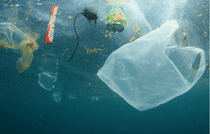
Currently only about 3.5% of all plastics generated is recycled compared to 34% of paper, 22% of glass and 30% of metals. At this time, plastics recycling only minimally reduces the amount of virgin resources used to make plastics. Recycling papers, glass and metal, materials that are easily recycled more than once, saves far more energy and resources than are saved with plastics recycling.

Why is each Community's curbside program different?

Curbside recycling pick-ups can be handled in a variety of ways. In many communities the city has chosen to make recycling a citywide service available to everyone. They may do this by contracting with one or more haulers to provide the pick-up as Boulder has done, or the city itself may provide this service to everyone as Longmont does.

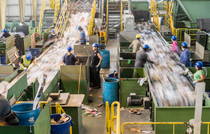
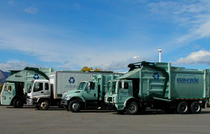
In other communities curbside recycling pick-up may be available through independent trash haulers. Many trash haulers now have a separate fleet of trucks to pick-up recyclables that are then hauled to a processing facility. In these communities the service needs to be arranged by each individual resident. This of course takes both awareness and initiative on the resident's part.

Because different companies or entities do the hauling of recyclables, different items get picked up. What they pick up depends on what their trucks are equipped to handle, what the processing facility they transport to can handle and how aggressive they are in their waste reduction efforts.

How can I reduce my Junk Mail?

STOP the Junk Mail Monster! Take back your mailbox by reducing unwanted mail. List brokers sell or rent your name to thousands of businesses each year, resulting in an average of 41 pounds of junk mail pouring into every American mailbox every year. You can stop this deluge of waste.

Find more answers to your frequently asked questions here.

Find links and resources for more information about recycling and Zero Waste