















All you wanted to know about composting...and more!
Compost happens naturally, no matter what, but
by following these directions you help to accelerate the natural
decomposition process to produce healthy soil.
Step 1: Obtain a bin or an area in your
yard that is approximately one cubic yard (3'x3'x3'). Size is
important for the proper temperature. Piles that are too small
cannot hold enough heat for effective microbial activity, and
piles too large (more than 5 feet cubed) do not allow for enough
air to reach microbes in the center of the pile.
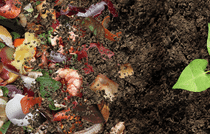
Step 2: Mix two parts brown (dry leaves,
small twigs, straw, etc.) with one part green (grass clippings,
kitchen scraps, etc.). This 2:1 ratio provides the best mix of
carbon (brown materials) to nitrogen (greens).
Step 3: Chop or break up any twigs and
large pieces of fruit and vegetable waste. Materials will break
down more quickly with increased surface area.
Step 4: Keep it moist. Water your compost
to keep it moist like a wrung-out sponge.
Step 5: Keep it turning. Compost needs
air. Turning the compost will help it break down and will prevent
it from smelling unpleasant.
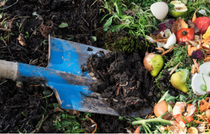
Step 6: When it is ready your compost
should look and smell like richsoil. Use finished compost to feed
your garden, flowers, potted plants and lawn.
Flowers and vegetables: Work in
half an inch of mature compost into the top six inches of the
soil with a garden fork or rototiller. Be sure that soil isn't
sodden with water as this can result in an "adobe effect" when it dries which adversely affects the plants.
Perennials: Use compost as mulch
to gradually improve the soil. Apply it an inch or so deep, between
the plants.
Seedlings or potted flowers: Use
20% mature compost in the soil mix (if the mix you purchased doesn't
already contain compost or worm castings).
Lawn: Sprinkle 1/8 to 1/4 inch
of fine compost evenly across the grass to improve the lawn's
ability to use fertilizers more efficiently so that less is needed.
If you do fertilize your lawn, consider using one of the natural
products based on recycled dried poultry wastes (often listed
as DPW on the ingredient list) rather than synthetic chemicals.
Trees and shrubs: Uncomposted wood
chips, grass clippings, and leaves can be spread around plantings.
Be sure that woody wastes are shredded or chipped up.
Indoor plants: Add small handfuls
to the surface of the soil inside the pots. It will break down
over time and provide nutrients as it decomposes.
Compost Tea: Ailing plants can
get a boost from "tea" made from a shovelful of finished
compost soaked in a 5-gallon bucket of water for a week. Drain
off the liquid and dilute one part tea with two parts water, and
water indoor or outdoor plants.
| What shouldn't go in compost? |
Bones, meat, eggs (egg shells are okay),
cheese, and other dairy products or oils should be thrown in the
garbage. Excrement from dogs and cats should also be kept out.
| Doesn't compost smell bad? |
No. Compost should not create an odor
if you take care of it properly and don't overload the system. Always bury the food waste by pulling aside some of the bedding, dumping the waste, and then cover it up with the bedding again. Bury successive loads in different locations in the bin.
Healthy compost smells like soil.
If your compost is smelly, that's a sign that it needs more air.
Aerate your compost by regularly turning your pile. Worms in a 16"x19"x12" bin can process 2-3 pounds of garbage a week. Capacity of a 20" x 24" x 12" bin is up to 5 pounds of garbage a week.
The secret to compost does not lie in
a commercial bin. Many composters simply wire off a 3'x3'x3' area,
while others use pallets for bin walls. However, if you do want
to use a commercial bin, please note that stores stock the widest
availability of bins in the spring. Prices range from $30 to $200.
Boulder County is holding a compost bin sale on Saturday, May 10 from 9 a.m. - noon. The sale will take place on the west side of the Boulder County Recycling Center at 1901 63rd St. in Boulder. For more information, please call 720.564.2242.
As of April 2007, the following local stores stocked compost bins and/or supplies (information courtesy of Boulder County):
| Boulder |
|
Ace Hardware
Basemar Center
2486 Baseline Rd
303-443-1616 |
- Bonide Composter - Granule
- Roebic Composter - Liquid
- Compost Fork
- Green hex netting for making a compost bin (20 guage)
|
Harlequin’s Gardens
4795 N. 26th St.
303-939-9403 |
- Eko Compost
- Eko Claybuster soil amendment
- Back to Earth Cotton Burrs – finished compost
|
Home Depot
1600 29th St.
303- 449-4221 |
- Lilly Miller Compost Maker (bioactivator)
- various turning tools and supplies to make bins
|
Liberty Hardware
691 S. Broadway
303-499-7211 |
|
McGuckin's Hardware
2525 Arapahoe Avenue
303-443-1822 |
- Tumbling Bin by Achla (on frame)
- Spinning Bin by Achla (rotates on base)
- Wire Frame Bin by Bosmer
- Garden Composter by Garden Gourmet
- Maxi Composter
|
| |
|
| Erie |
|
Costco
16375 N Washington St. Thornton (Larkridge Shopping Center)
303-474-3255
|
|
| |
|
| Longmont |
|
Ace Hardware
17th and Main St.
303-776-5173 |
- Bonide Composter - Granule
- Roebic Composter - Liquid
- Compost Fork
- Green hex netting for making a compost bin (20 guage)
|
The Flower Bin GardenCenter
9800 Nelson Road
303-772-3454 |
- Enviro-Cycle Composter/Tumbler
- Compost Bin Maxi Size
- Wire Bin Composter
- Kitchen Compost Bin
|
| |
|
| Superior |
|
Costco
600 Marshall Rd.
720-587-1000 |
|
| |
|
Purchasing by Mail Order
|
|
| Troubleshooting frequent compost problems |
Odor
The most common problem is unpleasant, strong odors which are caused by lack of oxygen in the compost due to overloading with food waste so that the food sits around too long, and the bin contents become too wet. The solution is to stop adding food waste until the worms and micro-organisms have broken down what food is in there, and to gently stir up the entire contents to allow more air in. Check the drainage holes to make sure they are not blocked. Drill more holes if necessary. Worms will drown if their surroundings become too wet.
Worms crawling out of the bin
Worms have been known to crawl out of the bedding and onto the sides and lid if conditions are wrong for them. If the moisture level seems alright, the bedding may be too acidic. This can happen if you add a lot of citrus peels and other acidic foods. Adjust by adding a little garden lime and cutting down on acidic wastes.
Fruit flies
Fruit flies can be an occasional nuisance. Discourage them by always burying the food waste and not overloading. Keep a plastic sheet or piece of old carpet or sacking on the surface of the compost in the bin. If materials are held in a container too long, fruit flies may lay their eggs in them. To control fruit flies:
- Add food scraps when they're fresh.
- Bury food scraps under bedding.
- Keep a lid on your bin (but be sure there are air holes for the worms)
- Sprinkle calcium carbonate (lime from stone, not "quick lime") in the bin.
- Place a petri dish filled with vinegar in the bin or place the bin outside in subfreezing temperatures for a few hours (but don't let the worms freeze).
If flies are still persistent, move the bin to a location where flies will not be bothersome. A few friendly spiders nearby will help control fly problems!
| Learn more about composting |
Become a Master Composter by taking one of the extremely informative and thorough trainings provided by Boulder County Resource Conservation Division. Learn more from the county's website or by calling 720-564-2220.
Check out the following links for more information on composting at home or jumpstarting composting in your community:
Backyard composting and worm composting (vermicomposting)
Municipal Composting
Several cities across the country operate curbside organics collection programs, and one of the best programs is in San Francisco.
The process begins with red worms digesting organic waste and producing castings. These nutrient-rich populations of microbes are then steeped within our new compost tea brewer. The result is a highly beneficial compost tea that will jump-start your plants and turn your soil into living, healthy soil. Learn more about how the tea is brewed and how it can help your plants and yard.
|