












Return to Archived List of Ask Eco-Cycle Articles

It's easy to get started with composting

Friday, March 21, 2003

Dear Marti,


I want to get a compost pile going, but don't really know where to start. I know there's a whole science to composting, but is there some basic way to do it?

Signed,


Freida


Dear Freida,


At first blush composting may seem like an activity reserved for the scientifically advantaged-those who can speak about wormology and tell their Nematodes from their Annelids. But there is a simple approach, and take it from someone who once super glued her fingers to her physics entry in a "Scientific Youth" competition: If I can do it, you can do it. Luckily for us, "compost happens." (You've seen the bumper stickers?)

According to Eco-Cycle's compost/organic farming expert Dan Matsch (yes, we're related) there are basically two approaches to composting. If you are an active gardener, you might want to go the "Active Composter" route, which involves a multiple pile system, paying attention to the ratios of nitrogens and carbons, and active watering and turning-the fastest approach to creating finished compost. The simpler, yet slower approach is "Passive Composting" (the PC approach-so appropriate for Boulder County).   By following the basic steps in this method, you can create a healthy soil amendment for your garden, lawn and house plants, save money on fertilizer and trash costs, and keep organic materials out of the landfill, preventing global warming methane emissions.  


Here is the basic, "Compost for Dummies" (if you will) approach Dan recommends for us "PC" types:


1. Buy a bin or build one with four pallets placed on end and wired together. A bin is key to passive composting. If you just use a pile instead, you'll get weeds growing in it and therefore weed seeds when you add it to your garden. We don't want that.

2. If   possible, place the bin in the shade and where the compost will have direct contact with the ground. This will help the moisture level stay higher and you may be surprised to find that red compost worms have moved in when you dig into it-an added bonus. If the bin is going to be on concrete, you might want to buy or borrow some finished compost to get a little microbial activity going.

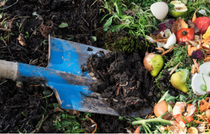
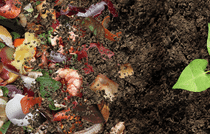
3. Collect food waste in a lidded bucket or large food container, chopping up any large fruit and veggie pieces. The more surface area you create within your pile, the faster the material will decompose. Dump the bucket in the compost bin. If y ou're concerned about attracting furry night visitors, keep dairy and meat products out. Egg shells are okay. Don't forget the coffee grounds; these are great for your soil. Exclude any excrement from Fido and Fluffy.

4. Let it rot and go about your life.

5. Water your compost from time to time if it dries out. A smelly compost is a cry for air. Using a pitchfork to turn the compost remedies odiferousness.

6. In the fall when you have a lot of leaves and twiggy yard waste, you might want make a separate pile that's even more passive and will take about two years to mature. Adding this material to your food waste pile will slow down the process significantly. After a couple of years your yard waste pile will become mulch or a finished compost, depending on your moisture conditions.

7. Use it! Passive composting may take a while, but it will happen. Ready to use compost looks and smells like rich soil. In this system, harvest your compost by skimming the unrotted stuff off the top and use the rest in your garden or with potted plants, house plants, etc. This year, given our current drought conditions, using your compost is more helpful than ever, since it increases your soil's ability to hold moisture.


To learn more about composting, buying a bin, and how to use finished compost, visit our website at www.ecocycle.org . If you're more the active composter type, sign up for a Master Composter training provided by the Center for Resource Conservation (CRC, formerly the Boulder Energy Conservation Center) and the Colorado State University Cooperative Extension office. Contact CRC at 303-441-3278. Check out Worms Eat My Garbage by Mary Appelhof for more information on composting with worms or visit Mary's website at www.wormwoman.com.


Happy composting, and Happy Spring Equinox!