












Dear Lauren,
I have had some around-town sightings of bagasse bowls, cornstarch cutlery and other compostable containers. Instead of being made from a non-renewable, petroleum-based polymer, these products are made entirely from plant material, including corn, wheat and bagasse (not to be confused with a large rear-end, bagasse is the biomass remaining after sugarcane stalks are crushed to extract their juice).
They’re all part of an exciting new trend in “disposable” single-use products designed with the environment in mind, not the dump. Note the last part of that sentence: NOT the dump. These products are created for commercial-scale composting, not for a landfill. Businesses using biodegradable products without first setting up compost collection are putting the cart before the horse…or the cornstarch before the compost.
You might think it could still be a good thing to put these materials in a landfill since they break down, but landfills and composts aren’t the same—they’re not even distantly related. Materials buried in a landfill eventually break down, but they do so anaerobically, or without oxygen. This anaerobic decomposition produces methane, a greenhouse gas that, according to the EPA, is 21 times more effective at trapping radiant heat than carbon dioxide. As a result, landfills are the fourth largest source of human-caused greenhouse gases in the U.S. That’s bad.
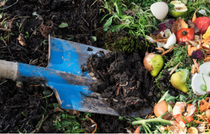
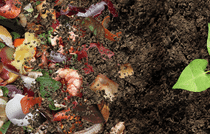
By contrast, in a well-functioning compost program, materials break down aerobically (with oxygen), and rather than become a significant contributor to global warming, they create a valuable soil enhancer. That’s good. The difference is so important that many communities and countries around the world, such as Germany and Nova Scotia, have outlawed the landfilling of biodegradable materials to minimize their greenhouse gas emissions.
Bio-based products are on the rise for both financial and environmental reasons. With the soaring prices of petroleum, they’re starting to be cheaper than some plastic products. Environmentally they’re definitely not as good as a reusable alternative in saving energy and resources, so whenever possible choose reusable tableware and packaging. However, when disposables are “necessary” – for packaged food at stores like Wild Oats, for outdoor community events like the Boulder Farmers’ Market, or for “to go” products at coffee shops like Folsom St. Coffee Co.—these products are preferable to disposable plastics when compost collections are provided.
If you’re taking these products home, you have a couple of compost options. You can try composting them in your back yard, but some of the bioplastics take a long while to decompose—I’ve had one in my compost bin for almost a year. The next time you go back to the store where you got these products, use their compost bin and if they don’t have one, ask them to start a collection program.
Please don’t ever put these containers in the recycling bin—you can usually recognize them by the #7 recycling symbol and the acronym PLA. Perhaps one day soon you WILL be able to put them in a compost bin alongside your recycling bin! The city of Boulder is currently running a pilot program at 2,400 homes for curbside compost collection that they hope to spread citywide in 2007. By implementing such a program, Boulder and other cities are setting up the infrastructure to compost bio-based packaging and products at the curb, and helping to make plastics in the trash a thing of the past.