








Dear Jan,
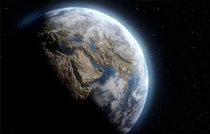
Friends don’t let friends landfill organics, so here’s what you can tell your pal. Putting organic materials—like food waste, yard waste and even paper—into a landfill doesn’t just make it fill it up, it actually makes the planet warm up through global warming. A landfill isn’t a giant compost bin. Materials buried there get densely packed in, giving them no access to the elements—especially oxygen. Your friend is partially right about materials breaking down in a landfill, but they do so anaerobically, or without oxygen, and over a significantly longer time than in a compost bin. This anaerobic decomposition produces methane, a greenhouse gas that, according to the EPA, is 21 times more effective at trapping radiant heat than carbon dioxide. As a result, landfills have become the third largest source of human-caused greenhouse gases in the US.
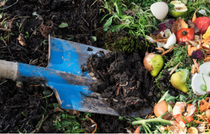
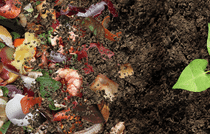
By contrast, in a well functioning compost bin, materials break down aerobically (with oxygen), and rather than becoming a significant contributor to global warming, they create a valuable soil enhancer that replenishes depleted soils and helps retain water, a definite plus in arid climates like ours.
When given the choice between global warming and healthy soils, most people choose the latter, and for this reason, many communities around the world have taken action and banned organics from the landfill. The material is redirected into community compost programs that feed local soils, benefiting the farmers in the area with greater crop yield and the capability to use less water and fertilizer. Nova Scotia completely banned all organics (including paper) from its landfills while in the EU, every member is required to reduce the amount of all organic material going to the landfill (including non-recyclable paper) by 65% within 15 years. In the U.S. , 23 states ban or restrict the landfilling of yard waste. You guessed it, Colorado is not one of them, but we are working on the local level to create more compost opportunities and municipal programs.
There is something you can do to help our community landfill less and compost more. Perform a little compost intervention for your friend and the many others like her who don’t know how or why to compost by applying for the Master Composter Training offered by the Center for ReSource Conservation (CRC), CSU Cooperative Extension-Boulder County, and the Boulder County Resource Conservation Division. They’ll teach you everything you need to know to be an expert in composting and give you the resources to teach others how easy and valuable it is to make and use compost. This is a once-per-year opportunity, and the deadline is fast approaching (March 10th!), so contact CRC at 303-441-3278, or the Boulder County Cooperative Extension at 303-678-6238 for an application or to get more information. You can also learn more or get an application at www.conservationcenter.org.
Now your friend can’t accuse you of blowing hot air when you talk about composting, and in fact, you can teach her how to avoid contributing her own hot air to the planet.