









For events of all sizes, including Zero Waste Event Kits
Return to Archived List of Ask Eco-Cycle Articles

Paper doesn't have to come from trees

July 9, 2004


Dear Marti,

You wrote about recycled paper in one of your recent columns, and I was wondering about papers made from other materials like kenaf or hemp. Do they hurt recycling by competing with recycled paper, and can they be recycled?

Thanks,

J. L.


Dear J.L.,

In my ideal world (close your eyes and go there with me now), we in the recycling industry wouldn’t be recycling paper made from tree fiber. We would be recycling paper made from a multitude of other fiber sources, from kenaf and hemp to agricultural waste and used textiles (like rags and old clothing). We as consumers could buy recycled paper that was originally made from these alternative sources. It’s not a competitor. Fiber doesn’t have to come from a tree to make paper or to be recycled –you can recycle these papers in your paper bin. My ideal world isn’t far from reality (well, this part isn’t, anyway). It’s comes right out of the history books.

Making paper from trees is a relatively recent concept, a practice that is only about 150 years old. Some of the first paper made, dating back to 150 AD, was made from hemp and rags. Cotton, agricultural byproducts, rice, flax, and many other fibrous plants have also been used for centuries.

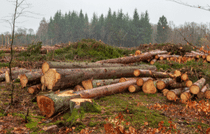
With the invention of the printing press during the industrial revolution, faster printing machines increased the demand for paper. Wood cut from North America became the primary source for paper fiber, not because it was the best fiber for the job, but because at the time there seemed to be an endlessly abundant source of it.

Now, here in the U.S. with less than 5% of our nation’s original forest cover remaining, the forests are seeming a little less abundant and trees are seeming to be a less than ideal source for paper. Wood has a low cellulose content of 60% and has a relatively high percentage of lignin, an organic glue that must be removed to make high grade white writing paper. In order to break down the glue, powerful toxic chemicals are used.

By comparison, kenaf, an annual plant related to cotton and okra grown in warmer, southern climates, matures in 150 days (southern pine must grow 14-17 yrs. before harvest). It also yields 2-4 times as much fiber per acre as southern pine. Kenaf fibers are not as tough as wood pulp and contain less lignin, so less heat, time and chemicals are needed to pulp the fibers. Kenaf requires few or no pesticides or herbicides. The USDA has chosen kenaf as the fiber source with the best potential to replace wood.

Hemp offers many of the same benefits, but it is currently illegal to grow it commercially in the U.S. because of its relation to marijuana. However, because it is possible to breed the plant to be about as intoxicating to smoke as a stalk of corn and because it differs from kenaf in that it can also grow in northern, cooler climates, there are many farmers throughout the country who would like to see industrial hemp legalized. Here in Colorado, Republican State Senator Lloyd Casey tried unsuccessfully to pass the Colorado Hemp Protection Act in 1995 to represent the interests of his farmer constituents.

According to the USDA, hemp produces four times as much pulp per acre as trees and matures in about 100 days. Like kenaf, it requires few or no pesticides and herbicides. Its lignin content is 4% compared to wood’s 20% lignin content and does not need chlorine bleaching. Many of our founding fathers were hemp growers and in fact early copies of the Declaration of Independence were printed on hemp. Thirty countries, including Canada, allow the growth of industrial hemp and American manufacturers can legally import it.

Some of the most exciting alternative papers out there are those made from agricultural and textile waste. With 1.5 billion tons of agricultural waste like rice straw and wheat straw being produced around the world each year and most of that being burned or buried, communities and state governments are trying to find alternative outlets. Turning it into paper not only solves a disposal issue, it creates a solution to deforestation.

To learn where you can buy high grade writing and printing papers made from these alternative fibers or from alternative fibers blended with recycled content, visit these sites:


Posted July 2004