











Zero Waste and Climate Change

Methane is short-term climate heavyweight

Imagine how difficult it would be to shut down 20 percent of our coal-fired power plants. Now imagine how much less difficult it would be to divert all biodegradable materials from our landfills and send the materials to compost facilities instead. According to new research by Eco-Cycle, the short-term climate impact is the same!

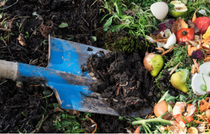
When biodegradable materials such as paper products, food scraps and yard trimming are tossed in the garbage and sent to the landfill, those lettuce heads, grass clippings and paper boxes don’t just break down as they would in nature or in a compost pile. They decompose anaerobically, without oxygen, and in the process become the number one source of human-caused methane and a major player in climate change. In fact, methane is now understood to be 72 times more potent than CO2 over a 20-year period. This means our landfills emit the greenhouse gas equivalent of 20 percent of U.S. coal-fired power plants every year!

Current accounting protocols for greenhouse gas emissions fail to address the short-term risks and opportunities of methane (CH4) emissions. Correcting the time horizon—a policy, not scientific decision—launches methane abatement from a climate afterthought to an essential first step forward in the fight against global climate change, and recognizes landfill methane emissions as a source equivalent to 20% of U.S. coal-fired power plants. Based on the data from the Intergovernmental Panel on Climate Change (IPCC), we believe keeping organic materials out of the landfill and avoiding potent methane emissions to be the quickest, easiest and cheapest first step for a community to immediately reduce its GHG emissions while working toward longer-term reduction strategies.

Download the Eco-Cycle Position Memo, "Beyond Kyoto: Why Climate Policy Needs to Adopt the 20-year Impact of Methane"

Use our calculator to compute the 20-year impact of your greenhouse gas emissions from waste.


COOL 2012 Campaign

Eco-Cycle, in partnership with BioCycle, the leading national magazine for the composting industry, and the GrassRoots Recycling Network (GRRN), have launched the Compostable Organics Out of Landfills by 2012 (COOL 2012) campaign to show communities they can achieve significant climate results RIGHT NOW by PREVENTING landfill-produced methane.

What can your community do? There are four COOL solutions:

1. Seize the Paper: Commit to recycling a minimum of 75% of all paper and composting the rest by 2012.
2. Source Separate: Require source separation of residential and business waste into three streams: compostables, recyclables and residuals.
3. Feed Local Soils: Support local farmers and sustainable food production with community composting infrastructure.
4. Stop Creating Methane: Public policy needs to first support the elimination of methane by requiring source separation of compostables and recyclables, then mitigate methane from existing sources where organics have already been buried.

Learn more and get involved at www.cool2012.org.


Stop Trashing the Climate report released

Stop Trashing the Climate, co-authored by the Institute for Local Self-Reliance, Eco-Cycle and GAIA, proves a Zero Waste approach is one of the fastest, cheapest and most effective strategies to protect the climate. Significantly decreasing waste disposed in landfills and incinerators will reduce greenhouse gas emissions the equivalent to closing 21% of U.S. coal-fired power plants. This is comparable to leading climate protection proposals such as improving national vehicle fuel efficiency. Indeed, preventing waste and expanding reuse, recycling, and composting are essential to put us on the path to climate stability.

Stop Trashing the Climate documents the link between climate change and unsustainable patterns of consumption and wasting, dispels myths about the benefits of landfill gas recovery and waste incineration, outlines policies needed to effect change, and offers a roadmap for how to significantly reduce greenhouse gas emissions within a short period. Read more about the report and download the executive summary, full report, press release and more>>