










Front Page

Director's Corner

Volunteer Opportunities

Environmental Choices


Ask Rosie


Become an Eco-Cycle Member

In This Issue

Recycle Your Athletic Shoes

The Precautionary Principle

In Memory of Kent Savage

Are You an Eco-Cycler?

An Africa's Worth of Plastic

Designing for the Environment, Not the Dump

Zero Waste Around the World

Local Initiatives Toward Zero Waste

CU Recycling Update

Boulder County Communities Tackle Waste Reduction

Boulder Kids Conquer School Lunch Trash

Don't Bag Those Grass Clippings

Thank You

An Africa's Worth of Plastic!

by Brian Ladd

 
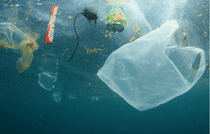
Africa is a big continent—11,677,240 square miles. To think of a floating sea of plastic waste as big as Africa in the middle of the Pacific Ocean is, well, unthinkable. And yet this is what researchers in the area are telling us now exists. According to Charles Moore of the Algalita Marine Research Foundation, who has extensively scuba-dived and sampled the area, the problem is real and growing. Mr. Moore estimates that there are six pounds of plastic for every one pound of plankton in a giant region called the Central Pacific Gyre. As a result of ocean currents and tides, for the last fifty-odd years every piece of plastic that has made it from our shores and the shores of other countries to the Pacific Ocean has been accumulating in this enormous sink. The huge area also includes disturbing concentrations of waste, including a bizarre sign of modernity: a 10-mile wide swath of some 6 million Taco Bell chalupa bags!

Inadvertent and intentional dumping of plastic debris in the ocean (or in rivers that eventually run to the ocean) is an old problem, and unfortunately one that continues to this day. Plastic debris poses a distinct hazard to marine life because it does not readily degrade and can be ingested or cause other physical harm. Worse, plastics have been shown to act like sponges for other toxic materials we deposit in the ocean, soaking up chemicals like DDT and PCB’s, which can bio-accumulate up the food chain and cause serious neurological, reproductive, and developmental problems in marine life and in humans.

While everything from cigarette lighters to plastic jar lids to fishing net cast-offs are out there in the Gyre, the biggest problem is nurdles—plastic pellets used by industry in the production of everything from CDs to plastic pipe. Still, the culprits are many and widespread—consumers and industries around the world are responsible. It’s the breadth of the problem that suggests an extensive solution involving changes at all levels of our economy and in our collective disposal behaviors.

To prevent the plastic continent from growing, we need to stop the water dumping of plastic wastes completely, and we need to continue improving opportunities for plastics recycling and reuse. Plus, in line with Zero Waste principles, we need to shift away from plastic products made with non-biodegradable and non-renewable resources to alternative products made from renewable and biodegradable resources (see article on this page). To reduce the impact of the Gyre on sea creatures, some suggest an important first step would be eliminating the production of red plastics, since wildlife such as albatross are more likely to mistake plastics of this color for food. Of course, even if we were to stop all plastic waste from entering our waters now, the problem would continue to grow for many years as currents and tides carry existing waste plastic out to sea. According to marine biologist Curtis Ebbesmeyer, “... if you turn off the plastic switch by magic, you’d have plastic washing up for the next 30, 40 years.”

For more information on campaigns aimed at reducing plastic waste and the toxic threat posed by plastic packaging, visit the website of the International Plastics Task Force at www.ecologycenter.org/iptf.


Home | Recycle at Home | Recycle at Work | Recycle at School | Hard-to-Recycle Center - CHaRM | Tidbits and Facts |
Zero Waste | Newsletter | Calendar and Info | Composting | Buy Recycled | Hazardous Waste | Stop Junk Mail | Volunteer |
Support Eco-Cycle | Site Map |


Newsletter Web Site Design By Ariel Design Group
© Copyright Eco-Cycle, 2000.
All rights reserved.