













|
It’s
not always good news in the recycling industry. While we work hard
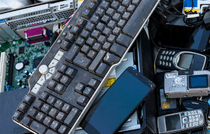
to open markets for more and more materials such as computers and
electronic waste, one of the old standbys is in jeopardy. Glass is
becoming an increasingly difficult material to market nationwide,
due primarily to the increased use of plastic packaging and the
decline of the use of glass. In particular, marketing mixed
colored shards of glass has always been a challenge to glass
recycling, but with the decline in glass markets it’s now worse
than ever. Across the U.S., these tiny broken pieces have become a
landfill-bound byproduct of glass recycling, since markets are
interested in whole pieces that are more easily color sorted.
Glass recycling is particularly bleak here in the Rocky Mountain
Region, since the local glass buyers are beer bottlers who
primarily only want the amber (brown) bottles, and can no longer
use the vast volumes of glass being generated. As a result, the
markets are closing their doors to more materials, and most
programs in the area have been forced to discontinue accepting
glass altogether—a fate EcoCycle is working hard to avoid.
Instead,
we are actively researching three alternatives to the local
markets. The first entails shipping rail car loads of glass to
alternative buyers in Missouri, Oklahoma, and California. This is
an option we have never been able to pursue in the past because we
didn’t have access to rail, but thanks to the rail spur at the new
Boulder County Recycling Center, we are now able to ship many
materials this way, making shipping both more efficient and
cost-effective, and giving us access to more long-distance
markets.
A second option is to sell the glass locally for use in road base
for the T-REX construction project on I-25 and I-225 which, in
addition to building 19 miles of light rail transit, also plans to
make 17 miles of highway improvements.
The third option is a high-tech approach to better sort the glass
into its various colors. By installing an optical sorter, glass
pieces—including the small broken shards—can be automatically
sorted by color, making them far more valuable to market.
The glass situation isn’t good news, but we’re not giving up. We
don’t want to end our glass program, and we know Boulder County
recyclers don’t want to start tossing glass in the trash. We’ll
keep you posted on how our efforts are panning out. In the
meantime, keep recycling your glass (please avoid breaking it
whenever possible), and keep your fingers crossed as we work to
keep this recyclable alive.
|