














Front Page

Director's Corner

Volunteer Opportunities

Environmental Choices

Enviro-Calendar

Ask Rosie

Become an Eco-Cycle Member

In This Issue

EcoCycle's First 25 Years

EcoCycle's Next Step: A One-Stop Drop

Boulder's Drop-off Center to Move

Changes for Boulder Recyclers

New Boulder County Recycling Center is Ready

Computer and Electronic Recycling: EcoCycle's New Frontier

Boulder County Dumps on Neigbors

Zero Waste Around the World–Why Not Here?

CU Recycling Update

U.S. Corporations More Environmental in Other Countries

Some U.S. Companies Implementing Zero Waste

Composting Made Simple

New Boulder County Recycling Center is Ready

EcoExtras

U.S. Corporations More Environmental in Other Countries
Why Not Here?

by Sam Cole

While America is creating record amounts of waste, most other industrialized nations now have “take-back” laws requiring manufacturers to bear responsibility for their products’ after-lives. Called “Producer Responsibility,” these laws have prompted companies to design products for reuse and recycling. So if American companies are redesigning their products to obey laws in Europe and elsewhere, WHY AREN’T THEY DOING IT HERE AT HOME?

Toxic Hi-Tech Companies Have Double Standard, Group Says
In an effort to get hi-tech companies to make their products “cleaner, greener and more recyclable,” the Silicon Valley Toxics Coalition (SVTC) of San Jose, California has evaluated company “take-back” programs and initiatives to reduce product toxicity. Researchers found a double standard between what U.S. companies do in Europe versus the United States. Examples include Apple Computer, which has a “take-back” and recycling program for their products in Germany but not in the U.S., and Dell, which has a similar program in five countries but not in the U.S. Nevertheless, the report noted several accomplishments right here at home. Sony is starting computer “take-back” programs in the United States, and Panasonic uses a lead-free solder in its portable mini-disc players. Companies paying the least attention to the environmental impact of their products were Goldstar, Samsung and Lucent.

Industry Opposes Making Mercury-Free Computers in U.S.
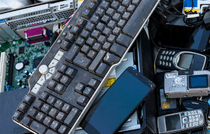
The U.S. electronics industry is lobbying against model legislation crafted by New England states to prohibit the use of mercury in computers and require producers to take them back for recycling. The legislation is comparable to European initiatives that require “take-back” of not only computers but other electronics. Computers contain significant amounts of heavy metals like lead, arsenic and mercury, which can contaminate groundwater if they are dumped in landfills. Perhaps to atone for their anti-environmental lobbying, the Electronics Industry Alliance is promoting a web site telling consumers where they can recycle computers. However, a patchwork of computer recycling programs in the U.S. will not prevent most computers from ending up in landfills.

Coca-Cola Uses 25% Recycled Content in Australia
For years, the Australian Coca-Cola bottling plant has used at least 25% recycled content in their soda bottles instead of virgin, non-renewable natural resources. EcoCycle, in conjunction with the national GrassRoots Recycling Network (www.GRRN.org), has been campaigning to get Coca-Cola to do the same here in the U.S., where Coca-Cola manufactures 20 million bottles a DAY made with only 2.5% recycled content, and 97.5% virgin material. Because there are no government requirements and little effort from Coca-Cola or other bottlers to use recycled content, recyclers in the U.S. are challenged to find reliable, profitable markets to recycle #1 PET plastic bottles.

Recently, new advances in technology have made it even more viable for Coca-Cola to “do the right thing” and use more recycled content in bottles manufactured in the United States. The new technology, developed by Petrecycle of Melbourne, Australia, is coming to the U.S. to be tested at a plant in mid-2001. Petrecycle says the new technology is cheaper than other plastic bottle recycling processes and is capable of producing 10,000 tons of recycled bottles each year.

Pressure upon Coke to change their position against using recycled bottles to make new bottles is now coming from large “socially responsible” investor groups and some stockholders. Recently, shareholder resolutions have been submitted which would require Coke to use 25% recycled plastic to make new bottles as well as pursue a national 80% recycling rate for beverage containers. Although Coke opposes the resolution, they are far more conciliatory than Pepsi in response to a similar shareholder resolution. Pepsi claims that consumers “[do] not respond in a way to justify the increased cost for bottles.” Coke, on the other hand, says they have goals and a timeframe for using more recycled plastic, but will not release details.

New statistics indicate that beverage container waste, including Coke and Pepsi bottles, increased by 52 percent between 1992 and 1999. In 1999 alone industry sources show that 97 billion – yes billion! - beverage containers were wasted. In Colorado alone, 233 PET Coke bottles are wasted every minute. Boosting recycled content and collection rates for plastic bottles would dramatically alleviate the waste and keep the plastic as a usable commodity instead of trash headed for the landfill.


Home | Recycle at Home | Recycle at Work | Recycle at School | Hard-to-Recycle Center - CHaRM | Tidbits and Facts |
Zero Waste | Newsletter | Calendar and Info | Composting | Buy Recycled | Hazardous Waste | Stop Junk Mail | Volunteer |
Support Eco-Cycle | Site Map |


Newsletter Web Site Design By Ariel Design Group
© Copyright Eco-Cycle, 2000.
All rights reserved.