














Websites with more information on Zero Waste
Fetzer Wine Has Goal of Zero Waste by 2009 and
It’s Already Darn Near!
Fetzer, whose wines are widely available in Boulder County, is not only
converting their vineyards to organic agriculture, but is also aiming to achieve
Zero Waste by 2009. By reducing, reusing and recycling, the company has already
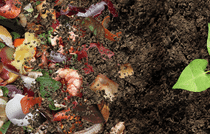
slashed its garbage by 93%! A big chunk of their waste is composted — mostly
grape seeds and cork. The company is also committed to buying recycled products
(even the roof on their building is recycled) to help keep markets alive for the
tons of paper, cans and glass they recycle each year.
In addition, solar energy provides power to Fetzer’s buildings and supplies
enough energy to fill and cap 1.2 million bottles of wine each year. Finally,
all Fetzer products come in recyclable packaging. Who could ask for more from a
company?
Huber Beer Sold in Refillable Bottles
Manufacturer take-back programs are a key component of the Zero Waste
paradigm and are an excellent example of producer responsibility. Refillable
beverage containers are a good example of this. Budweiser beer (longneck bottles
only) is sold in refillable bottles at Liquor Mart in Boulder, and Huber Beer is
sold in refillables at North Boulder Liquor, Liquor Mart and Centennial Square
Liquor in Longmont. Customers pay a deposit of $4.80 per case, which is refunded
upon their next visit to the store. Trucks that carry
the beer to the retailers return to the brewery full of empty bottles instead of
empty space. The bottles are then sanitized, refilled and delivered back to the
retailer.
Refillable Milk Bottles from Lowell Paul
For those wanting a more wholesome beverage, Lowell Paul Dairy of Greeley
sells returnable and refillable milk bottles at Wild Oats and Alfalfa’s
Markets. The Whole Foods Market’s name brand milk also comes in returnable
bottles. These brands all require a $1 deposit.
Hard Copy Recycling Turns Discards into Money
No one would buy a new tire if all it needed were air. Barbara Douglass of
Hard Copy Recycling in Longmont uses this logic to explain the benefits of
refilling used toner cartridges used in ink-jet printers for home or business
computers. Because manufacturers of toner cartridges typically don’t practice
producer responsibility by taking back used cartridges, Douglass has stepped in
to fill the need. Consumers and businesses know they can save money by going to
Hard Copy Recycling to refill their toner cartridges.
Also, by bucking the disposable society trend, customers of Hard Copy are saving
natural resources, supporting a local business and creating a new job market.
Interface, A Sustainable Carpet Company
Interface, Inc., the world’s largest carpet manufacturer, has set the goal
of becoming the world’s first truly sustainable company. Interface’s overall
goal is "to take nothing from the Earth that is not renewable and do no
harm to the biosphere." According to Interface CEO Ray C. Anderson, there
is no industrial company on Earth that meets its current needs without, in some
measure, depriving future generations of the means to meet their needs.
Interface strives for zero waste by rethinking the way their products are made,
transported, maintained, and recovered. For example, Interface now offers the
"Evergreen Lease," an innovative carpet rental-and-service contract
that minimizes carpet waste through the use of stronger, more durable carpet
fibers, recovery of worn carpet fibers for recycling,
and servicing of carpet on a section-by-section (rather than whole-carpet)
basis.
DOVatron Manufacturing of Niwot Reaches First in Colorado
DOVatron Manufacturing of Niwot, Colorado, a contract assembler of high-tech
products, is the first Colorado-based company to meet the ISO 14001
environmental management systems standards of the International Organization for
Standardization. Having ISO 14001 certification places
DOVatron among the environmental leaders in Colorado. Only three other U.S.
firms with operations in Colorado have achieved this milestone—Kodak (Windsor,
CO), Lockheed Martin Astronautics (Littleton, CO) and IBM (Boulder, CO).
DOVatron has implemented cutting edge strategies to cut air pollution and
reduce environmental impacts through efficient use of energy and materials.
These strategies include a pollution prevention program, conceptualizing and
designing products for minimum environmental impact, and an innovative program
to reduce packaging waste received from suppliers. Also, DOVatron replaced old
and inefficient machinery with modern versions that dramatically reduced
environmental impacts. These strategies and programs have
reduced both pollution and the cost of doing business.
BioCorp Designs Compostable Disposables
As much as ten percent of today’s landfill volume is single-use or
disposable products, including diapers, paper and plastic cups and plates, paper
toweling, and plastic trash bags. The BioCorp Company is challenging the notion
that "single-use" has to mean "disposable," by offering a
clever alternative to plastic and Styrofoam® food service items. BioCorp cups,
plates, and cutlery are made from fully biodegradable cornstarch and natural
polymers, and can be composted and returned to the earth within several
weeks after use. BioCorp also offers biodegradable leaf collection bags that can
be composted along with their contents. We may soon see cornstarch
"plastics" produced in quantity by chemical giants like Dow—so keep
an eye out for developments.
Lexmark Uses Recyclable Alternative to Styrofoam®
One of the drawbacks of buying electronics is the inevitable mountain of
Styrofoam® left over after de-packaging. Because these Styrofoam® blocks can’t
be recycled, Lexmark, a manufacturer of computer printers, has been using
recyclable paperboard instead of Styrofoam® as cushioning for most of their
non-laser printers since 1997. The paperboard Lexmark uses resembles egg cartons
and is accepted at many recycling centers in Boulder County. It’s even made
from recycled paper, so once recycled it could end up
as packaging in another Lexmark printer. The packaging is not only
environmentally-friendly but is also more compact, which means smaller boxes and
cost savings.
Exabyte Anticipates Changes to Meet New International Rules
With many countries around the world requiring manufacturers to take back
their used products and packaging for reuse or recycling—known as Producer
Responsibility—at least one Boulder company is stepping up to the plate to
meet the challenge. Recently, Exabyte of Boulder sent representatives to a
national "Take it Back" conference (see "Director’s
Corner" this issue) to learn how they might design their tape drives for
recyclability and disassembly. Exabyte understands the importance of assuming
responsibility for the life cycle environmental
impacts of their products, a condition of doing business in countries that
mandate Producer Responsibility.
Zero Waste Meets Longmont’s Country Fair
Longmont’s annual Rhythm on the River festival is a living example of how
easy it is to get close to Zero Waste without burdening the consumer—or in
this case the festival attendee. The festival was designed from the start with
Zero Waste in mind. Much of the eating ware provided by food vendors is
compostable—the spoons and forks are made from cornstarch and cottonseed oil
that are 100% biodegradable. Composting stations are set up for food and
compostable paper dishes, while recycling stations are set up for aluminum foil
packaging, plastic bottles and cans. The 14,000 attendees diverted 81% of the
trash in 1999 with barely a bother. Rhythm on the River exemplifies how waste
reduction can be achieved when it is designed into a system at the front-end —
and not merely considered an afterthought.