

















Front Page

Director's Corner

Volunteer Opportunities

Environmental Choices

Ask Rosie

Become an EcoCycle Member

In This Issue

CHaRM Now Accepting Plastic Bags

Cell Phone: New Toxic Burden

Recycling in Superior

In Memory of Rudd

Celebrating Year One at the CHaRM

Proposed Ban on Mercery Thermometers

New Drop-Off Site for Clean Wood Waste

POPs Pose Health Threats

Toxicity of Plastic Food Wrap

Zero Waste Around the World

CU Recycling Update

Proposed National Bottle Bill

Dogging Dell to Take it Back

Big Business Withholding Environmental Costs

Waste-Free Holidays

Thank  You's

"Bottle Bill" Would Reverse Declining Recycling Rate for Aluminum
by Eric Vozick


The EPA is pressuring the Securities and Exchange Commission and demanding that they enforce rules that would force companies to tell shareholders—and the rest of us—what it’s costing them to clean up their environmental messes.
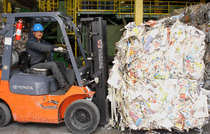
“Trashed Cans,” a new report put out by the Container Recycling Institute (CRI), shows a disturbing decline in the recycling rate for aluminum cans in the United States. In fact, during 2001 more aluminum cans were wasted than recycled. This disturbing fact has a tremendous impact on the environment; increased production of virgin aluminum to replace the wasted cans means more strip-mining for bauxite ore, additional greenhouse gas emissions, more energy and electricity use, and the disruption of communities in the developing world. As Jenny Gitlitz, the author of “Trashed Cans,” states, “The energy required to replace the 50 billion cans trashed last year was equivalent to 16 million barrels of crude oil—enough to meet the [yearly] electricity needs of all the homes in Chicago, Dallas, Detroit, Seattle and San Francisco.”
The United States’ current 49% recycling rate for aluminum cans is the lowest recycling rate in the past 15 years (the highest rate was in 1992, when 65% of all aluminum cans were recycled). Fortunately, there are solutions to this troubling trend, starting with the effort to pass a national bottle bill. The states with bottle bills (there are 11 now, as Hawaii joined the ranks earlier this year) are already recycling close to 80% of all their aluminum and other beverage containers. In fact, in 1999 these ten states, representing 29% of the entire U.S. population, recycled more containers than the other forty states combined.

To reverse the downward trend in beverage container recycling, Senator Jim Jeffords of Vermont introduced the National Beverage Producer Responsibility Act. This would be the first national bill requiring a minimum 10-cent refundable deposit on all beverage containers in all states (there was a container deposit bill—which did not pass—introduced in the House in the early 90’s). The goal of Senator Jeffords’ Act is to establish a measurable performance standard of 80% recycling or reuse for all used, empty beverage containers. This goal is set with the intention of allowing the industry the flexibility to design their recovery systems in the most efficient manner possible. In other words, the beverage producers can design their system as they see fit, as long as the job gets done.

Senator Jeffords has put together a flexible, straightforward approach which can help reverse the downward trend in beverage container recycling. To view the Jeffords’ Bill, visit the GrassRoots Recycling Network’s web site at www.grrn.org. To read the executive summary of CRI’s report, “Trashed Cans,” visit their site at www.container-recycling.org.

Caption: To reverse the downward trend in beverage container recycling, Senator Jim Jeffords of Vermont introduced the National Beverage Producer Responsibility Act to achieve 80% recycling or reuse for all used, empty beverage containers.


Why Do We Need a National Bottle Bill?

With declining recycling rates for aluminum cans, one of the easiest, most efficient materials to recycle, a little incentive wouldn’t hurt. The environmental cost of NOT doing it is significant. Check out these facts:

• Recycling one aluminum can saves an amount of energy equivalent to half that can filled with gasoline.

• Aluminum cans are made from bauxite ore. Most mining for bauxite ore occurs in the tropical rainforests, leading to soil erosion, deforestation, increased Carbon Dioxide production through forest burning (thus contributing to global warming), loss of wildlife habitat, plus the disruption of native populations in those communities. And don’t forget the additional waste and pollution created by bringing the virgin aluminum cans to market in the United States.

• Recycling aluminum results in the saving of 95% of the energy requirements, 95% of the pollution created, and 4 pounds of bauxite for every pound of aluminum recycled.


Home | Recycle at Home | Recycle at Work | Recycle at School | Hard-to-Recycle Center - CHaRM | Tidbits and Facts |
Zero Waste | Newsletter | Calendar and Info | Composting | Buy Recycled | Hazardous Waste | Stop Junk Mail | Volunteer |
Support Eco-Cycle | Site Map |


Newsletter Web Site Design By Ariel Design Group
© Copyright Eco-Cycle, 2000.
All rights reserved.