














|
Emerging Zero Waste Trends
“Biggie Fries, Hold the
Wrapper”
In urban areas of Korea, an astounding
30% of urban waste comes from fast-food chains. To tackle the
problem, the government has launched a campaign to get restaurants
to recycle 90% of their waste. In April 2001, Lotteria, the biggest
fast-food chain in Korea, responded by opening a franchise that uses
no disposables. More familiar chains like McDonald’s, Burger King
and Kentucky Fried Chicken are also cutting disposables and
replacing them with real dishes or recyclable containers. So if
these multi-national corporations can do it in Korea, why not here?
(For more information, contact the Korea Waste Movement Network at
waste21@chollian.net, or go
to New Zealand Zero Waste Trust at
www.zerowaste.co.nz and click on “International.”)
A “Bottle Bill” for
Computers
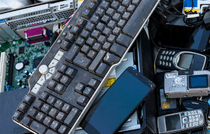
Oregon officials are looking for ways to curb the rapidly rising
rate of electronic waste dumped in landfills. One option under
consideration is a deposit law, similar to the “bottle bills” used
by many states to provide a financial incentive for returning
bottles and cans for recycling. Consumers would pay a deposit on a
new PC, for example, and redeem their deposit upon returning their
old computer to the retailer or manufacturer for recycling.
High-tech waste, like old computers and televisions, can contain 3
to 8 pounds of lead per unit. Since 1998 the volume of this waste
has more than doubled in Oregon and state officials worry about the
environmental threat it poses when landfilled. (For more
information, call the Oregon Department of Environmental Quality at
503-229-5983.)
Companies Must Take
Back E-Waste in Europe
The European Parliament has passed a law requiring manufacturers of
electrical and electronic equipment to reduce the use of hazardous
substances in their products and to pay for the recycling of their
products. The law, which passed on May 15, 2001 despite industry
opposition (including from U.S. corporations), covers practically
every electrical item from hairdryers to personal computers. Known
as the “Restriction on Hazardous Substances,” it will phase out
lead, cadmium, mercury, and brominated flame retardants. It is the
second EU policy that requires producers to take responsibility for
their products when they are scrapped-the first law was for
automobiles. Supporters of such laws in the United States say the
next step is to get American manufacturers that sell electrical and
electronic equipment in Europe to apply the same standards to their
operations in the United States. (For more information visit the
Silicon Valley Toxics Coalition’s web site at
www.svtc.org.)
TV Toxins Get
Phase-Out
In response to a new law in Europe (see above) requiring the
phase-out of hazardous substances in electronic equipment, TV
manufacturers are stepping up to the plate by replacing lead solders
with less toxic alternatives. Producers say half of the components
manufactured by 2003 could be lead-free-well before the 2008
deadline. Lead-free products first started showing up in Japan after
Sony successfully began marketing lead-free products.
Denmark: First Nation
in World to Ban Lead
In a move that may influence other countries to do the same, Denmark
has become the first nation in the world to ban lead. Danish
officials predict the new rule will cut lead in the environment by
50% once it is fully implemented in 2003. The ban was adopted to
curb the harmful effects lead can have on children’s intelligence,
behavior learning ability and other qualities. Lead-free
alternatives exist for many traditional products that use lead,
including cables, fishing supplies, plastics and construction
materials.
Producer Responsibility: From “e-waste” to Big Macs
E-Waste Crisis
Now that California is warning people that it’s illegal to throw
away computers and televisions due to their toxicity, cities like
San Jose are worried that the financial burden to properly dispose
of this “e-waste” will be placed on tax payers. A new City
resolution will regulate computer waste and create a collaborative
alliance of industry, government and environmentalists to reduce the
cost to taxpayers. San Jose City Councilmember Cindy Chavez calls
e-waste an “environmental crisis that threatens our natural
resources and local economy.”
McDonald’s Testing
Eco-Container
McDonald’s
is testing an EarthShell biodegradable burger container at over 100
locations in Chicago. The containers, made to fit the Big Mac, are
made from reclaimed potato starch, limestone and recycled paper,
biodegradable polymer and wax coatings, and water. The recycled
potato starch comes from the commercial processing of potatoes and
French fries. Also, no trees are cut to produce the packaging since
it’s made with “post-consumer” paper. EarthShell has announced that
it is testing a hot beverage cup at a California coffeehouse chain,
and EarthShell disposables were used with success at a “green
graduation” event at Hampshire College in Massachusetts. (For more
information on EarthShell products, visit their web site at
www.earthshell.com.)
Best Buy Collects Old
Electronics
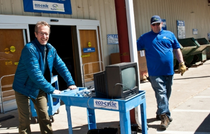
Some Best Buy stores in the United States have begun holding
collection events for electronic waste. The first collection event
was planned for September 2001 in metro Seattle, and several others
are planned for later this fall. There will be a fee to recycle
cathode ray-containing equipment like televisions and computer
monitors while recycling items such as cell phones, boom boxes and
VCRs will be free. Small electric appliances and appliances
containing Freon® are not accepted. Best Buy hopes to create a
market for re-using electronics that are newer and in working order.
News From the Frontlines
American Companies
Oppose Tax Breaks for Green Goods in Europe
A proposal by the European Commission to spur the purchase of
eco-friendly products with a lower sales tax is being fought by the
American Chamber of Commerce. The Chamber’s European arm consists of
140 of the largest corporations in America, including Disney, AOL
Time-Warner, and Boeing-who don’t want consumers to have a financial
incentive to buy environmentally-responsible merchandise.
E-Waste Recycling
Success
New collection programs for old electronics in the United States
have boosted the recycling rate for these items to about 25% by some
estimates. According to the International Association of Electronics
Recyclers, the recycling rate for items such as televisions,
computers and VCRs was only about 15% just two years ago. Now with
state and local governments, industry and non-profits like EcoCycle
launching “e-waste” collection programs, that rate is rising.
Dell Targeted for
Take Back
Ecopledge.com is demanding that Dell Computers take back
their old computers at the end of their useful lives. According to
Ecopledge.com, consumers do not have options for convenient and
environmentally-sound disposal of obsolete PCs and PC accessories.
500 million PCs will be rendered obsolete by 2007, and improper
disposal could increase the amount of lead, cadmium, mercury and
other toxins in the environment. Ecopledge.com is a national
coalition of students, consumers and socially-responsible investors
influencing corporations to take steps to minimize their impact on
the planet. |