











Front Page

Director's Corner

Volunteer Opportunities

Environmental Choices

Enviro-Calendar

Ask Rosie

Become an EcoCycle Member

In This Issue

New EcoCycle-Boulder Center for Hard-to-Recycle Materials

New Boulder Ordinance Creates Incentive to Reduce Waste

New Guide to Hard-to-Recycle Materials

Partners for a Clean Environment

New Boulder Drop-off Center is Open

Boulder County Recycling Center Grand Opening

Tribute to Mary Sucke

Zero Waste Around the World

Expanding Recycling Opportunities for County Drop-off Centers

Broomfield Recycling Center Turns Three

Mercury: Ancient Metal, Modern Threat

National Energy Act Encourages Wasting

Producer Responsibility Essential to Recycling Electronics


CU Recycling Update


Holiday Tree Recycling

Thank You's!

Mercury: Ancient Metal, Modern Threat
By Brian Ladd

 
Each year, approximately 17 tons of mercury from fever thermometers is discarded in municipal solid waste; that’s more than 15 million grams of mercury each year from fever thermometers alone-enough to contaminate a body of freshwater several times the size of the Great Lakes.

Most everyone is familiar with mercury. Some of us may have even let a dollop of the strange liquid metal roll around in our hands in chemistry class. Mercury was first used about 3500 years ago by the Chinese and Hindus, and is used today in a wide variety of household and industrial applications-for example computers, batteries, electrical switches, thermostats, dental amalgams, and children’s lighted running shoes. The mercury in coal accounts for the majority of releases to the environment, but the mercury found in commonly-used products still contributes substantially. The potency of mercury as a neurotoxin suggests that all sources should be minimized, and that non-mercury alternatives to mercury-containing products should be substituted wherever possible. If mercury vapors are inhaled or organic forms of mercury are ingested, the metal can wreak havoc on the nervous, reproductive, and other key organ systems of humans and animals.

Mercury is especially poisonous as methylmercury, an organic form that occurs when elemental mercury or mercury compounds are transformed by naturally occurring bacteria. The inorganic mercury vapor emitted from power-generating stations and waste incinerators, and the metallic mercury that enters the groundwater from leaking landfills, gets turned into methylmercury. If fish ingest methylmercury in the food they consume, the compound is concentrated in their flesh and then passed on to humans when those fish are eaten. Methylmercury may also enter the body through contaminated water or contaminated air.

Mercury’s potency as a toxin is remarkable. When released, a single gram (about the amount in a typical household thermometer) can contaminate a twenty-acre lake with enough methylmercury to prompt public warnings to limit consumption of fish caught in those waters. Each year, approximately 17 tons of mercury from fever thermometers is discarded in municipal solid waste; that’s more than 15 million grams of mercury each year from fever thermometers alone-enough to contaminate a body of freshwater several times the size of the Great Lakes. This threat is multiplied many times when you consider that some 220 tons of mercury are incorporated into products sold in the USA annually-mercury that could end up in the landfill. Even now, 40 states currently warn residents to limit their consumption of fish from some or all of those states’ waters.

Incinerating or Landfilling Mercury is Dangerous
Waste incinerators account for about 20% of our nation’s releases of mercuric gas into the environment. And landfills, some new studies suggest, contain high concentrations of the type of anaerobic bacteria that fix metallic mercury into methylmercury. When landfill containment systems are breached and leachate starts seeping out, the methylmercury migrates into the groundwater. It can also be off-gassed into the atmosphere and then returned to the earth through rain or snow.

We not only need to prevent the mercury currently in landfills or bound for incinerators from being released into the environment; we need to stop sending mercury-containing products there in the first place. How might this be done? There are a number of things we can do:

  • Safely recycle our mercury thermometers by taking them to the Boulder County Household Hazardous Waste facility and use a digital thermometer instead.
  • Use our power as consumers to choose products that do not contain mercury.
  • Press legislators to enact bans on mercury-containing products that are easily replaced with non-mercury alternatives. The cities of Duluth, Ann Arbor, and San Francisco have already done this with respect to mercury thermometers.
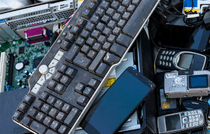
  • Phase out the use of mercury in computer components and implement better recovery programs for those mercury-containing products (like computers) currently in circulation.
  • Press for mandatory mercury emission limits at power generating stations, since currently there are no federal mercury standards for these facilities.
  • Reduce our use of electricity, or use electricity generated from renewable energy resources. Purchasing wind power is now an option for many Coloradoans.

In sum, we need to employ Zero Waste principles: designing for reuse, recyclability, and low-toxicity; and shifting responsibility for the recovery of products and packaging from consumers to the producers who make the goods in the first place. Through effective recovery programs for existing mercury and the phase-out of mercury in new products, the mercury currently circulating in our system can be kept from causing further harm to humans and to ecosystems.


EcoCycle Practices Zero Waste Principle of Reducing Toxicity
Mercury Thermometer Exchange Programs Are Practical First Step

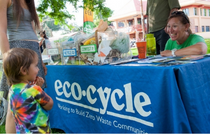
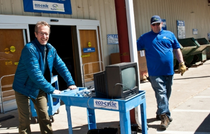
This fall, EcoCycle teamed up with the Boulder County Household Hazardous Waste Program, the Boulder County Health Department, the Boulder Community Hospital and the Longmont United Hospital to provide opportunities for Boulder County residents to exchange their mercury thermometers for less toxic digital models.

On October 27th and November 17th, mercury thermometers were collected at exchange points in Boulder, Lafayette, and Longmont. 1500 digital thermometers were purchased for the exchanges with funding from the U of C Federal Credit Union. (Note: if you missed these events, you can recycle your mercury thermometer at Boulder County’s Household Hazardous Waste facility. Call 303-441-4800 for their hours. No digital thermometers will be provided in exchange.)

By replacing mercury thermometers with safer digital ones, we can eliminate a common household risk and prevent the environmental harm associated with this product’s ultimate disposal.

Reducing the toxicity of the products and packaging we use is an important part of the Zero Waste vision. In many cases-like that of mercury thermometers-there is no good reason to use highly toxic materials to accomplish a product’s purpose. Ultimately, we hope that manufacturers will voluntarily eliminate their use of mercury and find non- or less-toxic alternatives.


Home | Recycle at Home | Recycle at Work | Recycle at School | Hard-to-Recycle Center - CHaRM | Tidbits and Facts |
Zero Waste | Newsletter | Calendar and Info | Composting | Buy Recycled | Hazardous Waste | Stop Junk Mail | Volunteer |
Support Eco-Cycle | Site Map |


Newsletter Web Site Design By Ariel Design Group
© Copyright Eco-Cycle, 2000.
All rights reserved.