











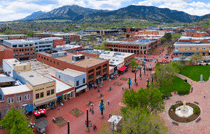

The Boulder City Council took a bold step forward in September when it unanimously adopted a new trash hauling ordinance that mandates a unit-based – or “pay as you throw” – approach to charging for garbage collection in the city. Come November 2001, recyclers generating one garbage can per week or less will be financially rewarded for their efforts to keep valuable resources out of the landfill – and Boulder will be on its way to becoming a “one-can town.”
In Boulder County today, garbage collection rates are volume-based: it costs just slightly more to throw out two garbage cans per week than to throw out one. Pay As You Throw (PAYT) charges for garbage collection by the unit, with each unit (a 32-gallon trash can) costing the same. With Boulder’s PAYT ordinance, throwing out two cans per week will cost twice as much as throwing out one can. Customers will be charged only for the level of service they require, creating greater control over the amount of money they pay for waste collection.
Recent research reveals that Boulder is only halfway to its 50% waste diversion goal. Data provided by Western Disposal shows that in 1999 fully 79% of their residential customers, a vast majority of Boulder’s households, subscribed to at least the two-can level of weekly trash service. The experiences of Bellevue, WA, San Jose, CA and Seattle, which have reduced two-can service customers to 38%, 13% and 11% respectively with PAYT, clearly show that we can do better.
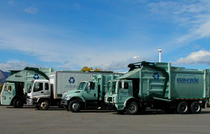
The new ordinance also requires trash haulers in the city to provide residential pick-up of recyclable materials, allowing current Recycle Boulder funding – approximately $880,000 per year – to be used for expanded recycling services for Boulder residents and businesses.
A Proven Success
In over 4,000 communities nationwide, PAYT has had a dramatic impact on residential waste diversion rates. San Jose, CA (population 850,000) saw its residential recycling rate increase from 28% to 43% in the first year of its PAYT program, and today that rate is 55%. Olympia, WA (population 38,000), which implemented PAYT in 1961, recently switched from weekly to biweekly trash collection, citing volumes too low to justify weekly collection, and Seattle (population 550,000) has increased its recycling rate from 19% to 49% through PAYT. Between 1989 and 1996, Bellevue, WA (population 104,000) saw its household waste disposal decrease by almost 50% and its residential recycling rate jump to 60%.
In our own backyard, Loveland (population 45,000) has seen its diversion rate skyrocket from zero to 56% since instituting PAYT in the early 1990s. Average trash landfilled per household dropped from 6.6 pounds per day in 1989 to 2.6 pounds per day in 1996 – a 60% reduction.
A Program Builder
Key to making PAYT work is providing convenient opportunities for people to do something with their trash other than throwing it out. Boulder already has a number of such opportunities in place, and the proposed expansion of the Recycle Boulder program to include the collection of additional materials at curbside, as well as yard and organic waste composting, among other programs, will allow PAYT to flourish.
Cities and towns across the country have embraced PAYT and used the equity and incentives inherent in the system to meet economic and environmental sustainability goals. The adoption of the PAYT garbage collection fee structure and the future expansion of the Recycle Boulder program will provide Boulder residents with the additional waste diversion services they desire while moving us closer to our 50% waste diversion goal. They are also the first steps towards Boulder becoming a “one-can” town and joining the thousands of communities around the country that are rewarding their recyclers.