


















Front Page

Director's Corner

Volunteer Opportunities

Environmental Choices

Enviro-Calendar

Ask Rosie

Zeke's Corner Kids Page

Become an Eco-Cycle Member

In This Issue

Boulder's Becoming a One-Can Town

Congress: Stop Logging Our National Forests

Eco-Cycle and Recycling Authority Sign Contract

Computer Recycling Comes to Broomfield

Computer Recycling: Eco-Cycle Gets the Lead Out

Nature's Own Donates 100% to Global Response

Read the Label Before you Buy a Toxic Cleaner

Toxic Waste on Your Face

CU Recycling Update

U.S. Thwarts E.U. Efforts to Recycle Electronic Wastes

Zero Waste: Producer Responsibility

Zero Waste Holiday Tips

EcoExtras

US Thwarting European Efforts to Reduce Hazardous Electronics Waste
by Brian Ladd

  The American Electronics Association, which includes such major corporations as Intel, Microsoft, and IBM, argues that the new EU directive to keep hazardous electronic waste out of the landfill constitutes an unfair technical barrier to trade under World Trade Organization rules.

US Electronics manufacturers are invoking the World Trade Organization’s rules of trade in an effort to thwart a European Union (EU) directive that would result in the safe manufacture, recovery and recycling of millions of tons of electrical and electronic equipment, including countless obsolete computers. 

The American Electronics Association, or AEA, which includes such major corporations as Intel, Microsoft, and IBM, argues that the new EU directive constitutes an unfair technical barrier to trade under WTO rules. The AEA fears that more stringent electronic equipment construction requirements and take-back rules in Europe could mean greater costs and reduced profits for the US companies that sell to European markets. The Office of the United States Trade Representative (USTR), under pressure from the AEA, has already successfully persuaded the EU to weaken early drafts of the Directive.

Formally known as the Directive on Waste from Electrical and Electronic Equipment, the EU ruling was developed in response to the escalating problem of electronics waste in Europe. It aims to keep hazardous electrical and electronic waste out of the landfill and away from the incinerator, through intelligent design, careful selection of non-hazardous manufacturing materials, and producer-funded recovery of product components. The Directive sends a clear message to manufacturers that they bear responsibility throughout the life-cycle of their products, and broadens the scope of environmental protection in Europe. The Directive also better protects workers in the electrical and electronics manufacturing industry. In short, the ruling is simply a strong vote for and clear example of Producer Responsibility (see article this page).

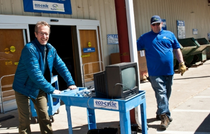
Electronic wastes—and especially computers—are a minefield of hazardous materials. Mercury, lead, cadmium, chromium, PCBs, halogenated or brominated flame-retardants all are regularly used in computer monitors, housings, and circuit boards. According to the Silicon Valley Toxics Coalition, from 5-8 pounds of lead are contained in every computer monitor; 40% of the lead and more than 20% of the mercury in our landfills comes from consumer electronics; and the toxic byproducts of incomplete plastics combustion have been detected in the tissues of animals as geographically isolated as Arctic seals.

According to the US Environmental Protection Agency, the ground-water barriers of even the best landfills eventually fail. Therefore, the toxins from electrical and electronic products that we bury today become the poisons that contaminate our children’s groundwater tomorrow. The European Union estimates that more than 90% of the waste from electrical and electronic equipment is landfilled, incinerated, or shredded with no pre-treatment or safe recovery of the constituent hazardous materials. This means that less than 10% of our computer devices are currently being recycled. Within just a few years, hundreds of millions of obsolete computers in the United States will be destined for the landfill unless wide-reaching recovery programs are initiated.
In response to the American Electronics Association’s success in pressuring the USTR, two Congresspersons, George Miller (D-CA) and Bernie Sanders (D-VT), along with Senator Paul Wellstone (D-MN) have written to Vice-President Al Gore, urging him to uphold Europe’s right to set their own environmental standards and take proactive measures to protect public health and the environment. Mr. Gore also needs to hear from us.

What You Can Do
Send a FAX to Al Gore at 202-456-2461 or an e-mail to vice-president@whitehouse.gov. In your correspondence, express your concern that the United States Trade Representative (USTR) is not representing the wish of the American people but instead is moving under corporate pressure to weaken important international environmental legislation that would help protect our common future. Contact Eco-Cycle at 303-444-6634 if you would like a copy of a sample letter. Let’s make sure that the electronic equipment we manufacture today doesn’t become a weight that burdens future generations.

For more information on this issue, visit the Clean Computer Campaign website at www.svtc.org; click on the Clean Computer Campaign heading.


Home | Recycle at Home | Recycle at Work | Recycle at School | Hard-to-Recycle Center - CHaRM | Tidbits and Facts |
Zero Waste | Newsletter | Calendar and Info | Composting | Buy Recycled | Hazardous Waste | Stop Junk Mail | Volunteer |
Support Eco-Cycle | Site Map |


Newsletter Web Site Design By Ariel Design Group
© Copyright Eco-Cycle, 2000.
All rights reserved.