






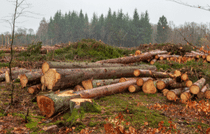















Mr. Udall feels that some commercial logging on public lands is appropriate, and says he is not convinced there is no role for the timber industry in our National Forests. We respectfully disagree. We feel that the past 100 years of environmental destruction caused by this industry is evidence enough that a major new approach to managing our National Forests is needed. We feel that the only timber cutting occurring in our National Forests should be of a very limited nature and conducted by the U.S. Forest Service
(USFS) for restoration purposes. Private timber corporations should conduct their business on private lands. One of the primary goals of H.R. 1396 is to transform the USFS into a custodial agency that will protect and restore our public lands, which was the original intent of Congress in establishing the National Forest system in the first place.
Rep. Udall says he doesn’t want to hurt rural school districts that rely on timber-sale receipts for part of their funding. Neither do we. But education funded by clearcuts is poor public policy, and we are working to end this practice, as is Mr. Udall. We need to start thinking about the long-term economic impacts of cutting down our National Forests. Ending the federal timber sale program will not only protect our forests, it will also protect future jobs and help stabilize rural economies. Recreation, hunting and fishing in National Forests generate 38 times more jobs and 31 times more income than the timber sale program. H.R. 1396 tackles the problem of dislocating timber jobs by funding a program to put loggers to work restoring the damage that’s been done over the past 100 years. From a social and economic perspective, there is no question that our National Forests are far more valuable standing, growing, dying and regenerating than being cut down and converted into two-by-fours and paper products.
Rep. Udall cites the threat of forest fires as a reason not to support this bill. H.R. 1396 permits prescribed burning and limited thinning of trees in the urban-forest zone (like here in the Front Range) in order to protect homes and lives, as long as there is no commercial incentive involved.
Given the fact that less than 3% of our nation’s timber supply comes from National Forests, there is simply no need to log our public lands to meet America’s demand for wood and paper. Conservation, increased recycling and the use of alternative fibers can more than make up the difference. Currently, federal timber subsidies undermine local recycling programs by creating market barriers for recyclers, putting them at a competitive disadvantage. Why should logging, which is part of the problem, be subsidized to the detriment of recycling, which is part of the solution?
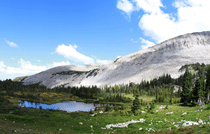
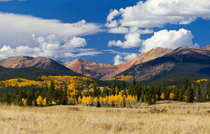
Our National Forests represent what is great about America — the freedoms and opportunities we all enjoy. Here in Colorado, we are blessed with 14 million acres of National Forests. It is where many of us go to recreate and rejuvenate ourselves. Yet these special places are not receiving the protection they deserve.
Every day H.R. 1396 is not passed, more trees fall, and more of our children’s legacy is destroyed. Clearly, the citizens of Colorado should not be expected to subsidize fiscally irresponsible and environmentally destructive enterprises — especially on our public lands. It’s time for Colorado’s congressional representatives to stand up to the politically powerful timber lobby.
Future generations will judge us harshly if we do not do all we can to protect Colorado’s — and America’s — remaining natural heritage. Please write your Congressperson TODAY and urge them to co-sponsor H.R. 1396, the “National Forest Protection and Restoration Act.” Tell them how you feel about your taxpayer dollars being used to cut down our National Forests.